
Feather plucking is one of the most frustrating problems a parrot owner can face. You watch your bird methodically pull out its own feathers, you search for answers, and most of what you find online is vague or contradictory. This guide tries to be more useful than that.
What Is Feather Destructive Behavior, and How Do You Spot It?
There’s a difference between a parrot preening and a parrot plucking. Preening is normal. Birds do it to realign feather barbs, remove debris, and spread oils from the preen gland. It looks deliberate but calm.
Feather destructive behavior (FDB) is different. The bird grips a feather and pulls. You may hear a faint snap. The feather comes out whole or chewed at the base. Over time, patches of bare skin appear, usually on the chest, inner wings, or thighs. The beak can reach all these spots. The head stays fully feathered because it can’t.
Symptoms of feather plucking in parrots to look for:
- Bare or thinning patches, especially on the chest, belly, or legs
- Feathers that look frayed, bitten, or broken rather than cleanly shed
- Skin that looks red, irritated, or inflamed in the plucked areas
- Finding whole feathers or feather debris on the cage floor
- The bird is preening more than usual, or doing it aggressively
One thing worth knowing: wild parrots rarely pluck. When you see feather-destructive behavior, it’s nearly always a signal that something about captive life isn’t working for that specific bird. That’s not meant to make you feel guilty. It’s just a useful lens for figuring out where to look.
Medical Causes: Rule These Out First
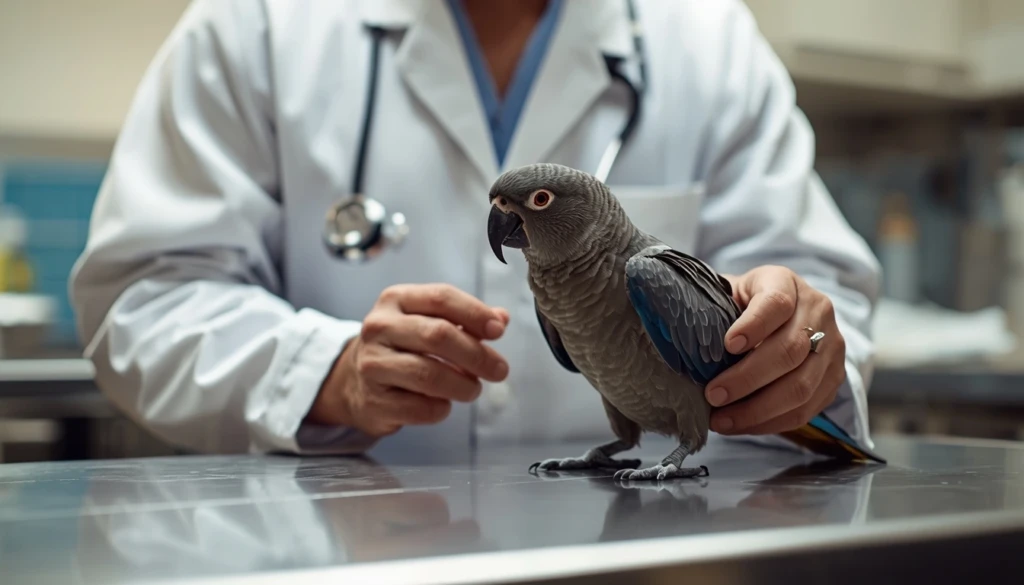
Before you assume the problem is behavioral, get a vet visit. A lot of plucking starts with physical discomfort that the bird can’t communicate any other way.
Systemic diseases. Liver disease, kidney problems, and zinc toxicity can all cause skin irritation that drives a bird to scratch and pull. Heavy metal poisoning from old cage hardware is more common than most people expect.
Infections. Psittacine Beak and Feather Disease (PBFD) is a viral condition that directly damages feather follicles. Giardia, a gut parasite, causes nutritional malabsorption that affects feather quality. Bacterial or fungal skin infections can also be triggers. A vet can test for most of these.
Nutritional gaps. Vitamin A deficiency is one of the more common issues, especially in birds on an all-seed diet. Low calcium and zinc also affect skin and feather condition. Fixing the diet won’t cure a plucked parrot overnight, but it removes one possible cause.
Environmental irritants. This is an overlooked one. Cigarette smoke, cooking fumes (especially non-stick cookware), aerosol sprays, and even the oils from an unwashed hand can irritate a bird’s skin and respiratory tract. Nicotine residue on fingers is a real problem for birds. If the cage is near a kitchen or in a room where people smoke, that matters.
For conure feather plucking specifically, vet visits often reveal Giardia more frequently than in larger species. It’s worth testing for.
Behavioral and Psychological Triggers
Once medical causes are ruled out, the focus shifts to the bird’s environment and emotional state. This is where things get complicated, and where generic advice like “give it more toys” tends to fall short.
The hand-rearing connection. Many pet parrots were hand-raised by humans rather than their parents. This matters more than people realize. In the wild, parent birds teach their chicks how to preen properly. The chick learns what normal, comfortable preening feels like. Hand-raised birds often miss this. They may over-preen because they never developed what researchers call an “endorphin recall” response, where the satisfaction signal from normal preening tells the bird to stop.
The addiction cycle. When a bird pulls a feather that isn’t ready to come out, it causes brief pain. That pain triggers the release of endorphins. The bird gets a small neurochemical reward. Do this enough times, and the behavior starts to self-reinforce. It’s been compared to avian trichotillomania (the human compulsion to pull hair). At that point, it’s not really about boredom or stress anymore. The plucking has become its own thing.
This is why some birds keep plucking even after their environment improves. The behavior outlasts the trigger.
Boredom vs. overstimulation. Both can cause problems, and they’re easy to confuse. A bird in a quiet, sparse environment with nothing to do gets bored. But a bird in a loud, chaotic house with constant unpredictable activity gets overstimulated. Neither state is good. The goal is something more like a predictable routine with enough enrichment to keep the bird engaged without overwhelming it.
Situational triggers. Some birds are fine most of the time but start plucking in response to specific events. Being caged at night when they’re used to being out. A new pet in the house. Furniture rearranged. A regular visitor who stops coming. These “situational pluckers” can be easier to help once you identify the trigger.
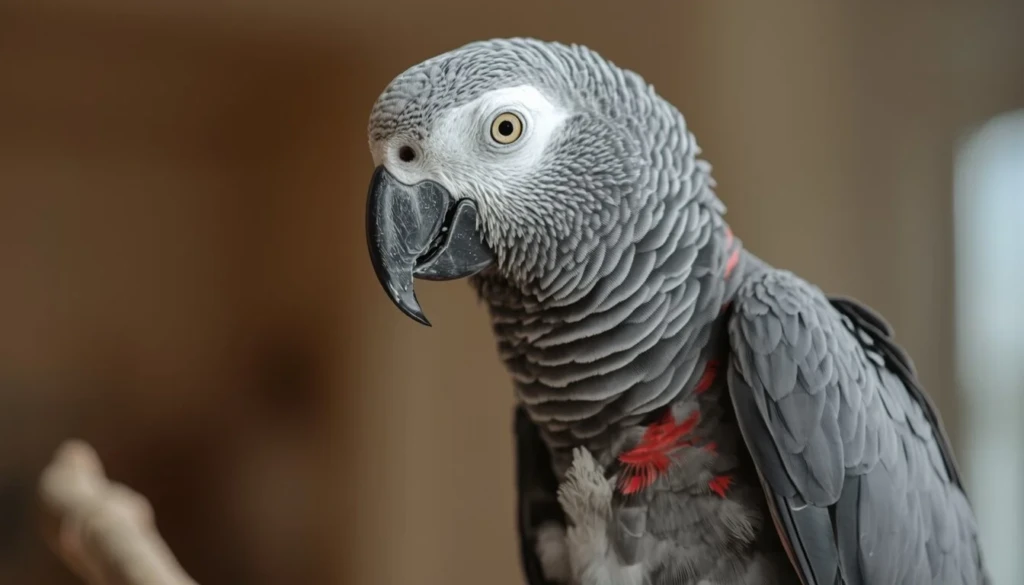
Hormones. Adolescent parrots go through hormone cycles, and adult birds can become “broody,” especially in spring. During these phases, chest and shoulder plucking is common. An African Grey plucking only its chest is often in this category. Hormonal plucking usually has a seasonal pattern and tends to ease off, though it can become habitual if it goes on long enough.
Common Mistakes Owners Make
Responding too quickly. If you rush over every time your parrot starts plucking, make eye contact, talk to it, or pick it up, the bird learns something: plucking gets attention. This doesn’t mean you’re a bad owner. It means parrots are smart and paying attention to what works. The better approach is to respond to the bird when it’s calm and occupied, not when it’s plucking.
Thinking covering the cage is enough. Sleep hygiene matters for parrots. They need 10 to 12 hours of actual darkness and quiet, not just a cover thrown over a cage in a room where the TV is on. Chronic sleep deprivation raises stress hormones in birds, which feeds behavioral problems. A separate, darker, quieter room at night is worth trying if your bird has ongoing issues.
Free-feeding. In the wild, parrots spend most of their day foraging for food. A bowl that’s always full removes that occupation. Foraging toys and puzzles that make the bird work for its food are more useful than most people expect. The mental engagement matters.
Practical Steps for Recovery
There’s no single fix for a plucked parrot. Recovery usually means addressing several things at once, and it takes time.
Hydration and bathing. Dry, itchy skin is a direct trigger. Misting your bird with lukewarm water or offering a shallow bath several times a week can reduce skin irritation and redirect the urge to preen. Some birds love being misted, others tolerate it, a few hate it. Start slow.
Diet changes. Animal protein is something many parrot owners don’t consider. Cooked egg (hard boiled or scrambled, no salt or oil) provides amino acids that are essential for feather regrowth. Small amounts of cooked chicken work too. Omega-3 fatty acids from flaxseed or fish oil can improve feather quality. These aren’t supplements in the “cure-all” sense, but they support recovery.
Enrichment that makes sense. Fruit tree branches, cork bark, and cardboard give the bird something to chew and destroy that isn’t its own feathers. Foraging toys that require effort. Rotation matters too. A toy the bird has had for six months might as well not be there.
Collars. Elizabethan (e-collars) prevent a bird from reaching its feathers, but they don’t address any underlying cause. They’re useful in short-term situations where the bird is causing serious skin damage or open wounds, but they’re stressful for the bird and should be used carefully and under vet guidance.
Consistency. Whatever changes you make, apply them consistently. Parrots are sensitive to routine. Improvement is often slow. A bird that’s been plucking for two years won’t stop in two weeks.
Can Feathers Grow Back?
Yes, in many cases. If the follicle isn’t permanently damaged, new feathers can grow in after the next molt. The problem is that long-term plucking, especially in areas where the bird has repeatedly pulled the same spots, can eventually scar the follicle. Once that happens, regrowth isn’t possible in those spots.
This is one reason early intervention matters. The longer the behavior goes on, the harder it is to reverse, and the higher the chance of permanent follicle damage.
Will Getting a Second Parrot Help?
Sometimes, but not usually as a direct solution. A second bird can provide companionship and stimulation, but if the plucking is driven by something environmental or psychological, adding another bird doesn’t address that. In some cases, the stress of adjusting to a new companion makes things worse, or the second bird starts plucking too.
If you’re thinking about adding a bird to your household, do it because you want two birds, not because you’re hoping one will fix the other.
Molting vs. Plucking: What’s the Difference?
Molting is symmetrical. Feathers are shed gradually across the whole body and replaced evenly. You might notice the bird looking slightly ragged or find feathers at the bottom of the cage, but there won’t be bald patches.
Plucking creates asymmetric bare spots, usually in areas the beak can reach. The feathers you find on the cage floor from a plucker are often intact or show signs of having been chewed. The bald skin is visible and sometimes irritated.
If you’re unsure, a vet can usually tell the difference on inspection.
A Note on Hand-Raised Birds
If you bought your parrot from a breeder, it’s worth knowing how it was raised. Birds from breeders like NG Parrots, which focuses on hand-raised parrots and responsible early socialization, are generally better adjusted than birds with unknown histories. But even well-socialized hand-raised birds can develop plucking habits if their captive environment doesn’t meet their needs. Early socialization reduces the risk, but it doesn’t eliminate it.
The Bottom Line
Parrot plucking feathers is rarely caused by one thing. It’s usually a combination of factors, some medical, some environmental, some behavioral. The most useful thing you can do is work through them methodically: vet first, then environment, then behavior. Avoid quick fixes. Don’t reinforce the behavior by rushing to comfort the bird every time it plucks. And give changes time to work before assuming they haven’t.
A plucked parrot can get better. It takes patience and consistency, but improvement is possible in most cases.
Frequently Asked Questions About Parrot Feather Plucking
Q: At what age do parrots typically start feather plucking?
Plucking can start at any age, but it’s most common during adolescence when hormones kick in, usually between 1 and 3 years depending on the species. Some birds don’t start until much later, often triggered by a change in their environment or routine.
Q: My parrot only plucks at night. What does that mean?
Nighttime plucking usually points to sleep-related stress. The cage may not be dark or quiet enough, or the bird is anxious about being left alone. Try moving the cage to a quieter room with full darkness for 10 to 12 hours and see if it changes anything over a few weeks.
Q: Is feather plucking contagious between birds?
Not in a viral sense, but birds can pick up the behavior from each other through observation. If one bird in a shared space is plucking heavily, monitor your other birds closely. This is one reason to be cautious about housing a chronic plucker with a younger or more impressionable bird.
Q: How long does it take to see improvement after making changes?
Realistically, several weeks to a few months. If the plucking has been going on for a long time, the behavior may have become self-reinforcing, which means even after the original trigger is gone, the habit stays. Some birds improve gradually, others plateau. Consistent changes over time matter more than any single fix.
Q: Can stress from moving houses cause feather plucking?
Yes, and it’s more common than people expect. Parrots are sensitive to changes in their physical environment, smell, lighting, and routine. A move can trigger plucking in birds that never showed the behavior before. Keeping the bird’s cage setup, feeding schedule, and interaction routine as consistent as possible during a move helps reduce the stress response.